Tropical Malady 2004 !!top!!
The first hour follows Keng, a soldier stationed in rural Thailand, and Tong, a young man working at a local ice factory. Their romance develops through quiet, everyday interactions: riding motorbikes, visiting movie theaters, and walking through night markets. Weerasethakul captures the tender, awkward, and deeply authentic evolution of their mutual attraction without melodrama.
Based on Thai folklore, this segment follows a lone soldier (played by the same actor who portrays Keng) tracking a shape-shifting tiger shaman into the dense, suffocating jungle.
Keng, a gentle soldier stationed in a small village, meets Tong, a local boy who works at a nearby farm. tropical malady 2004
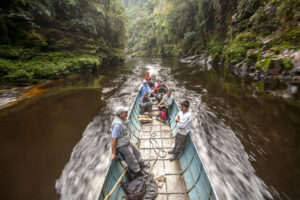
In Tropical Malady , the jungle is not merely a setting; it is the central protagonist. Apichatpong and his cinematographer, Jayanandha Chattrabhuti, craft an immersive auditory and visual landscape that feels alive, oppressive, and deeply spiritual.
Weerasethakul captures the warmth of small-town life, filling the screen with pop music, casual humor, and gentle intimacy. The first hour follows Keng, a soldier stationed
At the film’s core lies a figure from Isan (northeastern Thai) folk tradition: the powerful shaman who could transform himself into a wild animal. This myth is introduced in the second half but is foreshadowed throughout the first. An old woman guides Keng and Tong through a cave, sharing the legend of a tunnel through which only the blessed can pass. The implication is that Keng and Tong are marked—destined to become the hunter and the shape-shifter of the folktale.
If you need a specific scene transcript, academic references, or further analysis of the Buddhist iconography in the cave sequence, please ask. Based on Thai folklore, this segment follows a
Tong disappears from the physical narrative but embodies the spirit of the tiger. The pursuit becomes a metaphor for the longing to merge completely with the object of one's love. Narrative Structure and Themes
If you want to explore this film further, let me know if I should provide: A deep-dive of the transition point A summary of how international film critics reacted in 2004 A comparison to Weerasethakul's other major works Share public link